At a Glance
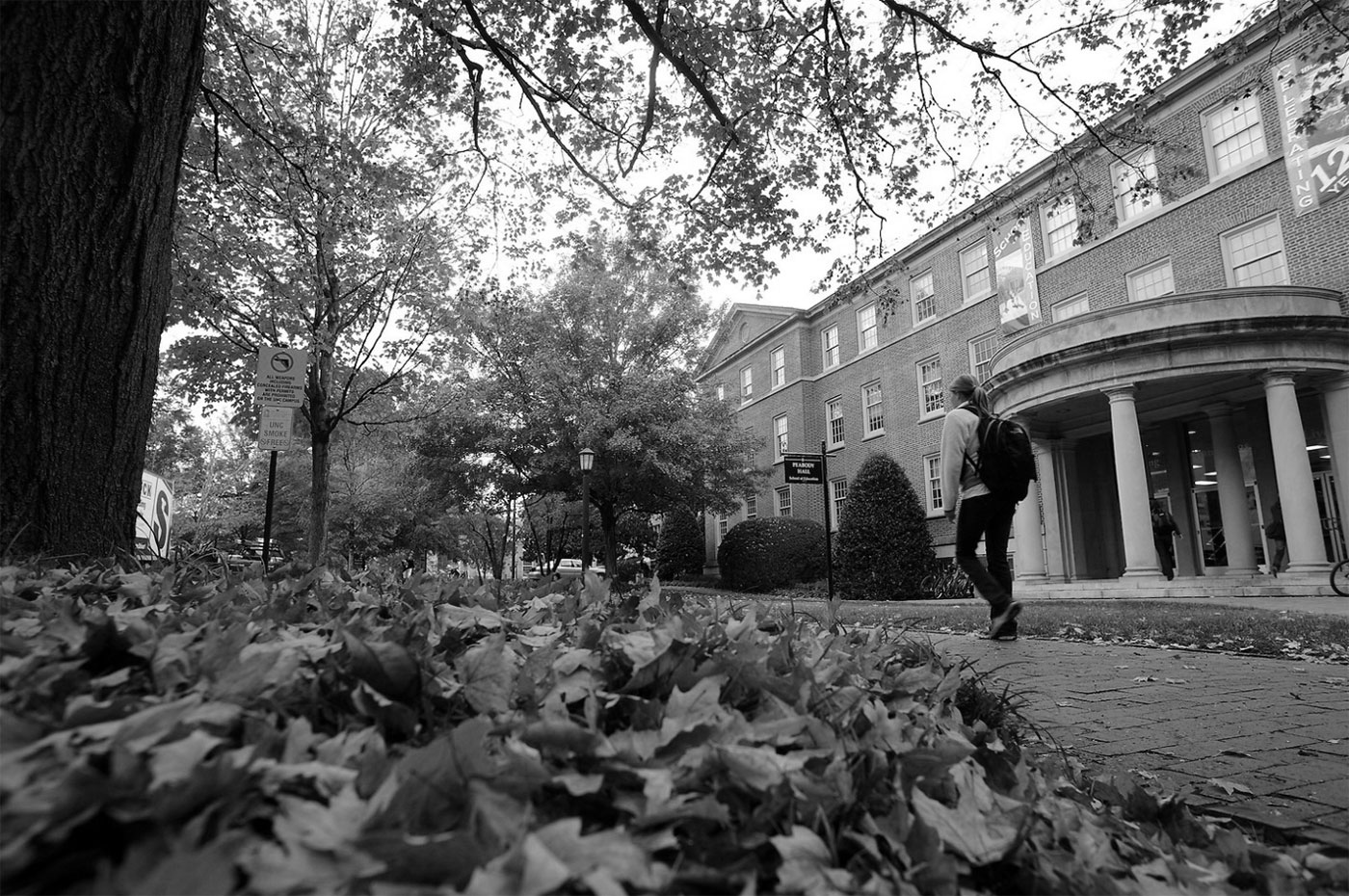
Peabody Hall
Founded in 1885, the School of Education was one of the first professional schools established at the University of North Carolina at Chapel Hill. Our mission is to support students, educators, schools and families in the state of North Carolina and across the nation through innovative instructional programs, scholarship and partnerships. Our goal is to help ensure that every student has the opportunities and support needed to reach her or his maximum potential as an individual, worker, family and community member and citizen of a democratic society.
- Teaching, Research & Outreach
- Organization
- Mission
- Rankings & Recognitions
- Faculty & Students
- Alumni
- Administration
Teaching, Research & Outreach
- Commitment to Teaching
The School offers a broad range of degrees and programs for undergraduate, graduate and post-baccalaureate students. Our 52 full-time faculty members instruct more than 750 students, preparing them to be leaders in early childhood education, public schools, higher education, policy and public service careers, and their communities.
- Usable Research
Our faculty pursues rigorous, practice-oriented research, attracting substantial funding. Our National Research Center for Rural Education Support strengthens schools in rural areas in North Carolina and across the United States with programs and research. Research projects range broadly, including studies of child development in impoverished environments, investigations of adolescent development and learning, examinations of students’ growth as mathematical learners and policy studies of how schools achieve both excellence and equity. - Outreach to Communities and Schools
Outreach is central to the School’s mission. We inculcate this in our students through service-learning experiences. Our faculty and staff support North Carolina’s educators through our centers and programs that include our Web-based network LEARN NC and our Center for Mathematics and Science Education. Through our Research Triangle Schools Partnership, we have collaboratively developed the Orange County Schools Initiative. Designed to enhance teaching and learning across the Birth-12 continuum, RTSP features undergraduate courses taught in the schools for our preservice teachers, professional development opportunities, and research on promising practices. - Commitment to Educational Equity
The School of Education is deeply committed to educational opportunity for all. We are particularly focused on the needs of children and their families who have been historically under-served by our schools. This commitment motivates and informs all our research, teaching and outreach.
Organization
The organization of the School reflects our responsibilities and commitments:
- The Teaching and Learning faculty focuses on improving classroom instruction grounded in our knowledge of student learning.
- The Educational Leadership faculty prepares leaders to support the learning of their students and staffs and work closely and productively with families and communities.
- The Human Development and Psychological Studies faculty works to better understand child and youth development in the context of families, communities and schools, and uses the findings to inform programs for educators and others.
- The Culture, Curriculum and Change faculty inquires into issues of equity, access to knowledge and the various contexts of teaching, leaning and schooling.
Faculty members from these various areas collaborate to offer a wide range of programs at the undergraduate, master’s and doctoral levels, as well as many flexible post-baccalaureate programs to accommodate practicing professionals. Specific programs are listed under Academic Programs.
Mission
Committed to diverse and democratic communities, the School of Education of The University of North Carolina at Chapel Hill, the first state university in the nation, recognizes and respects the promise of every child.
Our scholarly efforts, consonant with this distinguished research university, continually generate new knowledge that seeks improvement of education in the state of North Carolina and across the nation.
In our research-based programs, we educate teachers, administrators and other education professionals to become leaders at all levels of education.
We work with our students and with our colleagues in the schools to build learning communities where knowledge and skills, respect, hope and justice can be claimed by children and by the adults who teach and care for them.
Rankings & Recognitions
The School consistently ranks in the top 10 percent of schools of education nationwide. In 2009, U.S. News & World Report ranked the School of Education 23rd among the public and private schools of education across the United States that were included in the ranking.
In addition, four of our program areas were ranked in the top 20 nationwide in recent years: Educational Leadership, Elementary Education, School Counseling and Special Education.
Faculty & Students
| Faculty | Number |
|---|---|
| Full-Time Faculty | 52 |
| Level | Enrolled Students Fall 2008 |
|---|---|
| Undergraduate Degree Students | 209 |
| Graduate Degree Students | 488 |
| Post-Baccalaureate Students* | 68 |
| Total | 765 |
*Includes lateral entry, licensure only and add-on licensure
Alumni
Our 18,000 alumni contribute to commu-nities across North Carolina and the United States. Our alumni have received state teacher of the year awards, been nominated as national teachers of the year, served in high-level policy positions in the U.S. Department of Education as well as the N.C. Department of Public Instruction, filled senior-level positions in foundations and research centers, served as presidents of universities and colleges, and taught in higher education across North Carolina and the nation.
Administration
Dean Bill McDiarmid leads the School of Education. He is
a renowned scholar and experienced administrator whose
career has focused on strengthening teaching at both universities and schools through partnerships, improving the subject-matter preparation of teachers, enhancing learning opportunities for under-served students and grounding teacher preparation programs in solid evidence. He also has worked to engage policymakers in data-based conversations about how best to improve teaching and learning in our schools.
Assisting Dean McDiarmid are Senior Associate Dean for Academic Programs and Chief Academic Officer Jill Fitzgerald, Assistant Dean and Quality Assurance Leader Deborah Eaker-Rich, Assistant Dean for External Relations Wendy Gratz Borman and Assistant Dean for Administration and Finance John Plummer.